The Quiet Constraint: Why Hotel Inventory Scarcity in the Dominican Republic Is Fueling Real Estate Appreciation

The Dominican Republic is in the midst of one of the most sustained tourism expansions in the Western Hemisphere. In 2025 alone, the country welcomed more than 11 million visitors, with tourism revenues surpassing $11 billion—figures that continue to position the sector as a central pillar of the national economy.
This growth is not simply a rebound or a short-term surge. It reflects a deeper transformation in how the country participates in global travel flows. Improved air connectivity, sustained government investment in infrastructure, and strong international demand have combined to turn the Dominican Republic into a year-round destination with broad appeal across multiple traveler segments.
Yet beneath these headline numbers lies a quieter dynamic—one that is shaping not only the hospitality sector, but also the country’s real estate market. While demand continues to accelerate, the availability of hotel inventory—particularly assets available for acquisition—remains limited. The result is a structural imbalance that is beginning to influence capital flows in unexpected ways.

A Market That No Longer Turns Off
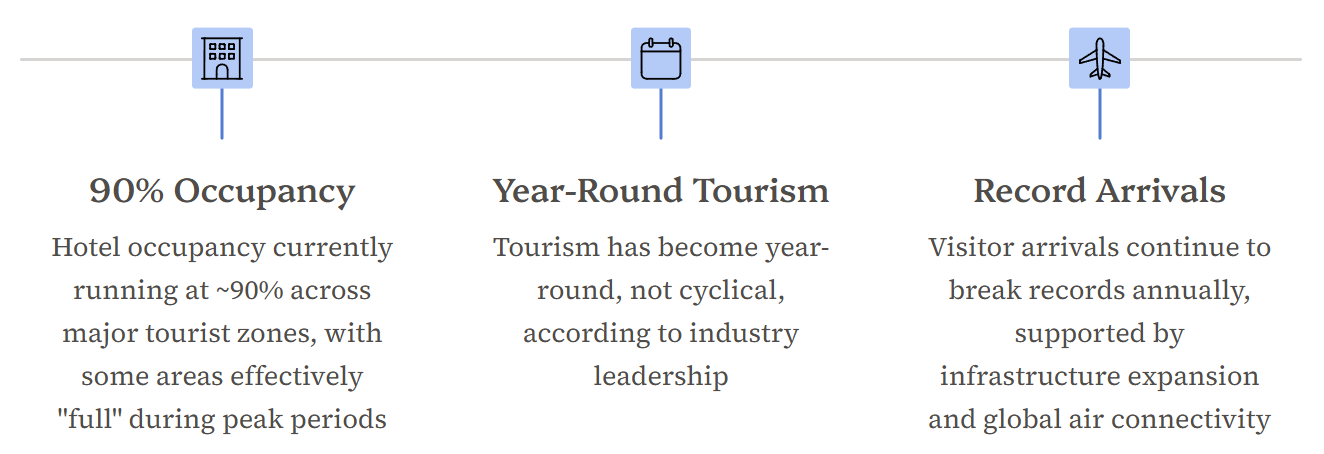
Historically, Caribbean tourism markets have been defined by seasonality. High occupancy during winter months was typically offset by slower periods in the summer and early fall. In the Dominican Republic, that pattern has gradually eroded.
Hotel occupancy rates across key destinations such as Punta Cana, La Romana, and Samaná have remained consistently high, often approaching full capacity during peak periods and maintaining strong performance even outside traditional high seasons. Industry data and operator reports suggest that the country is no longer experiencing the same cyclical dips that once defined the region.
This shift is being reinforced by continued growth in visitor arrivals. Each year has brought new records, supported by expanded flight routes, increased airline capacity, and a broader geographic mix of travelers. North America remains a dominant source market, but arrivals from Europe and Latin America have also strengthened, contributing to a more diversified and resilient demand base.
Equally important is the changing nature of tourism itself. While all-inclusive resorts remain a cornerstone of the Dominican offering, demand is increasingly spreading into adjacent segments. Eco-tourism destinations, wellness and medical travel, and longer-stay visitors—including remote workers—are becoming more prominent. This diversification is helping to smooth demand throughout the year, reducing volatility and reinforcing occupancy levels across the market.
Growing Supply, Limited Availability
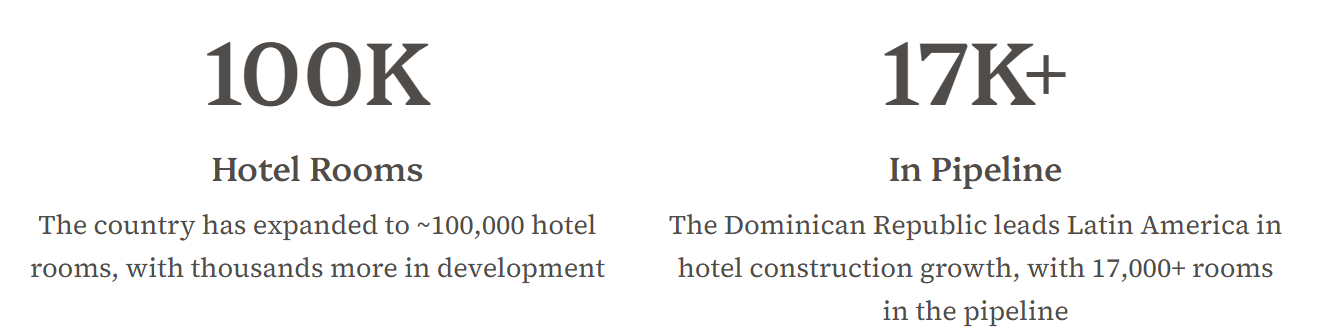
At a glance, the Dominican Republic appears to be responding to demand with new supply. Thousands of hotel rooms are currently under construction or in advanced planning stages, and the country continues to rank among the most active hotel development markets in Latin America.
However, the presence of new development does not necessarily translate into accessible inventory for investors. Much of the existing hotel stock is held by institutional owners or global hospitality brands operating under long-term strategies. These assets are typically not brought to market unless under exceptional circumstances.
Strong operating performance further reduces the likelihood of sales. High occupancy levels and steady cash flow provide little incentive for owners to exit, particularly in a market where future demand appears secure. As a result, transaction activity remains relatively limited, even as the overall sector expands.
This dynamic creates what industry observers often describe as a constrained or “tight” market—not in terms of physical capacity, but in terms of liquidity. Hotels are being built and operated successfully, but comparatively few are available for acquisition.
Pricing Power and the Absence of Urgency
Consistently high occupancy levels have another effect: they strengthen pricing power. When hotels operate near capacity for extended periods, operators gain greater flexibility in setting room rates, particularly during peak travel windows.
This ability to maintain or increase average daily rates contributes directly to profitability. In turn, strong financial performance reinforces owners’ long-term commitment to their assets. Without external pressure or declining returns, there is little urgency to sell.
The combination of high demand, solid revenue performance, and positive forward outlooks creates a market environment where holding assets is often more attractive than divesting them. For potential buyers seeking entry into the hospitality sector, this can translate into limited opportunities despite visible growth.
Where Capital Moves Instead
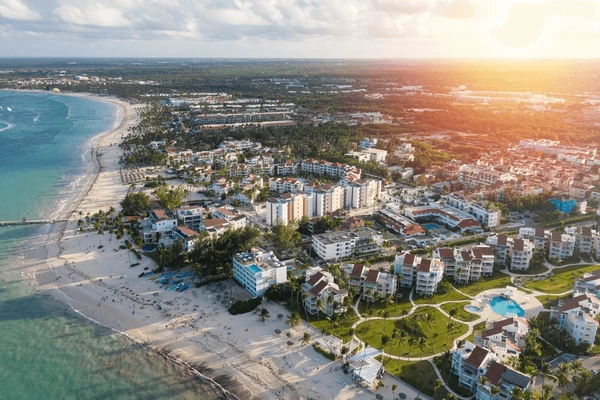
When direct access to hotel assets becomes constrained, investment capital tends to shift rather than withdraw. In the Dominican Republic, this shift is increasingly visible in the residential segment—particularly in second homes and hospitality-oriented real estate.
Properties such as beachfront condominiums, resort villas, and branded residences offer an alternative way to participate in the same underlying demand that drives hotel performance. These assets are often more accessible, both in terms of transaction availability and operational complexity, while still benefiting from tourism-driven occupancy.
Developers have responded by expanding mixed-use projects that integrate residential and hospitality components, blurring the line between traditional hotel stays and private accommodations. At the same time, short-term rental platforms have made it easier for individual owners to capture income from visiting travelers.

The Link to Real Estate Appreciation
The relationship between hotel market conditions and residential real estate performance is not always immediately visible, but in the Dominican Republic it is becoming increasingly direct.
As hotels operate at or near capacity, excess demand begins to spill over into alternative accommodations. Travelers who cannot secure hotel rooms—or who seek different experiences—turn to private rentals and second homes. This shift increases occupancy rates and income potential for residential properties in key tourist areas.
At the same time, hotel pricing establishes a benchmark for the broader market. When room rates rise due to strong demand, short-term rental properties are able to position themselves competitively, often just below hotel pricing while still achieving attractive returns.
Perhaps most significantly, the limited availability of hotel assets redirects investment capital into the residential sector. Investors who might otherwise allocate capital to hospitality acquisitions instead pursue properties that offer similar exposure to tourism demand. This additional capital contributes to rising property values, particularly in prime coastal and resort locations.
Stability Through Diversified Demand
Unlike purely local housing markets, second-home properties in tourism-driven regions benefit from international demand. The Dominican Republic’s visitor base spans multiple countries and economic cycles, providing a degree of diversification that can enhance stability.
This global demand, combined with the country’s growing reputation as a year-round destination, helps support both rental income and long-term appreciation. While no real estate market is immune to broader economic forces, the integration of tourism and residential demand creates a more resilient foundation than traditional, domestically driven markets.
A Market Shaped by Constraint
The Dominican Republic’s tourism success is widely recognized, but the implications of constrained hotel inventory are less frequently discussed. As demand continues to expand and existing assets remain tightly held, the resulting imbalance is influencing where and how capital is deployed.
For the hospitality sector, it reinforces strong operating conditions and long-term asset stability. For the real estate market, it creates an environment where second homes and residential properties play an increasingly important role in absorbing demand.
In this sense, scarcity is not limiting growth—it is reshaping it. And in doing so, it is quietly contributing to the appreciation and stability of one of the Caribbean’s most dynamic real estate markets.
