
The Strategic Ascent: Why Institutional Capital is Scaling in the Dominican Republic’s Tourism Sector

For global asset managers and institutional investment firms, the Caribbean has long been a region of interest, but the Dominican Republic (DR) has emerged as its undisputed heavyweight champion. No longer viewed simply as a leisure destination, the DR is now analyzed as a sophisticated infrastructure and real estate play.
In 2024 and 2025, the country shattered previous records, consistently surpassing the 10 million annual visitor mark. This isn’t a fluke of post-pandemic recovery; it is the result of a multi-decade, state-backed master plan that has transformed the nation into a fortress of “blue-chip” hospitality.

Macroeconomic Stability and “Confotur”
Institutional trust begins with the legal framework. The Dominican Republic’s Law 158-01 (CONFOTUR) is one of the most aggressive tax incentive programs in the Western Hemisphere. For qualified projects, it offers:
100% exemption from income tax for up to 15 years.
Exemptions from property transfer taxes and luxury tax (IPI).
Duty-free importation of materials required for the construction and equipment of hospitality assets.
This fiscal certainty allows fund managers to project higher Internal Rates of Return (IRR) compared to competing markets like Mexico or Jamaica, where regulatory shifts can be more volatile.
Infrastructure as a Moat
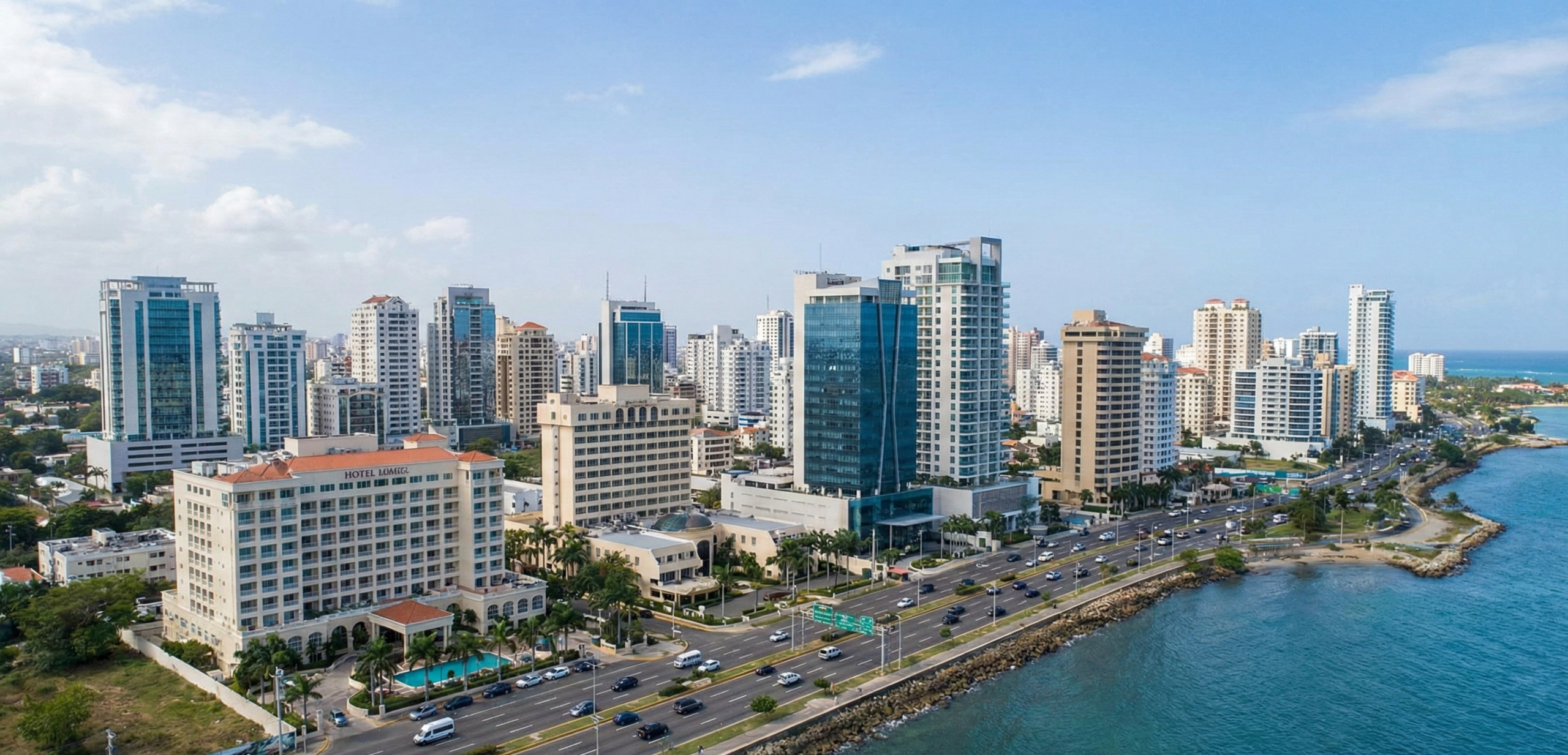
Asset managers look for “de-risked” environments. The DR has invested billions in its road networks and aviation hubs. Punta Cana International Airport (PUJ) is now one of the busiest in Latin America, connected to over 60 cities globally.
The government’s “Master Plan” for infrastructure includes the Cabo Rojo/Pedernales development—a multibillion-dollar public-private partnership (PPP) designed to create a new tourism pole. For institutional firms, this signals a government that is not just a regulator, but a co-investor in the industry’s success.
Yield Performance and Market Maturity
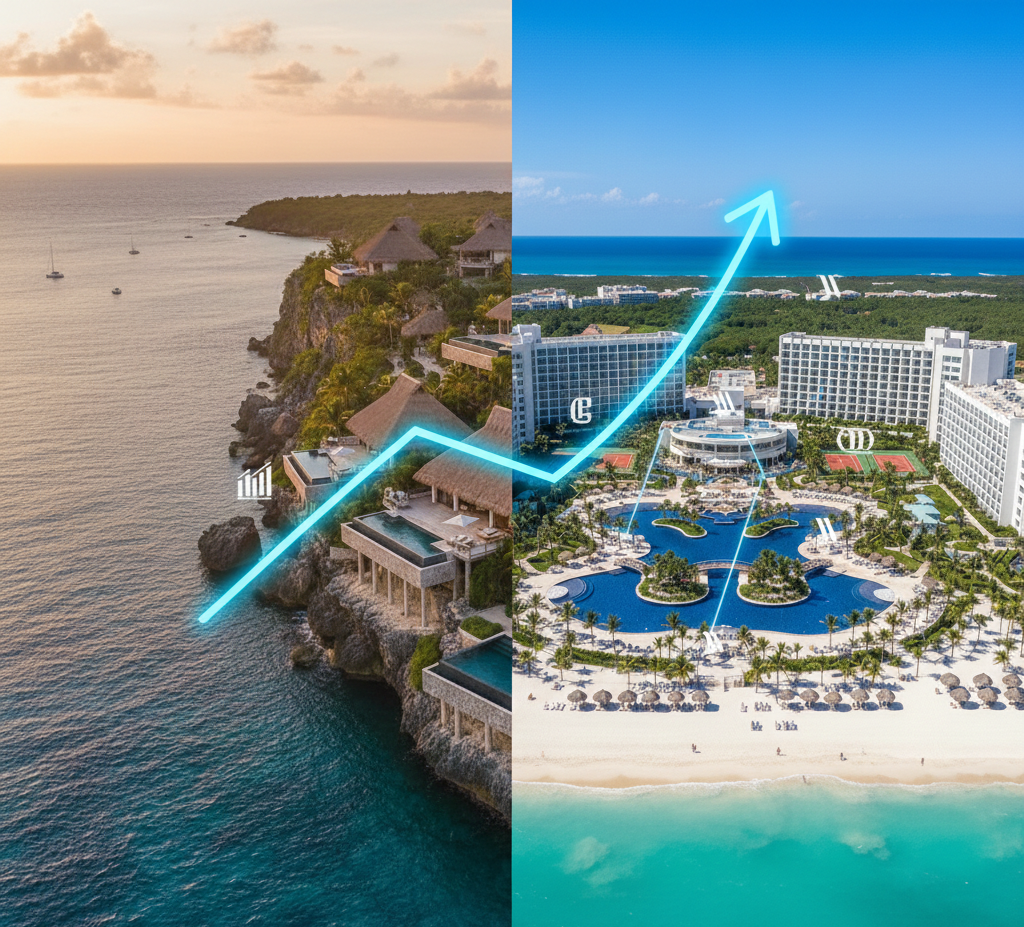
According to recent data from STR (Smith Travel Research), the Dominican Republic has maintained some of the highest Average Daily Rates (ADR) and Revenue Per Available Room (RevPAR) in the “All-Inclusive” and “Luxury Boutique” segments.
The market has moved away from “budget” travel. The entry of brands like St. Regis, Ritz-Carlton Reserve, and Four Seasons has shifted the asset class upward. This “brand-clustering” creates a virtuous cycle: as luxury brands enter, the asset value of the surrounding land and commercial sites appreciates, providing firms with significant capital gains upon exit.

Future Projections: The 2030 Horizon
The Central Bank of the Dominican Republic reports that Foreign Direct Investment (FDI) in the tourism sector has grown at a compound annual growth rate (CAGR) of over 7% over the last five years. Looking toward 2030, the projections remain bullish:
Diversification of Asset Classes: Beyond hotels, investment is pouring into Branded Residences and Mixed-Use Medical Tourism facilities.
Sustainability Mandates: Institutional funds are increasingly prioritizing ESG (Environmental, Social, and Governance) criteria. The DR is meeting this by pivoting toward “Green Building” certifications and sustainable land use in the Samaná and Miches regions.
Secondary Market Liquidity: We are seeing an increase in Portfolio Sales—where institutional funds sell stabilized assets to REITs (Real Estate Investment Trusts), proving that there is a clear “exit” for early-stage capital.
A Disciplined Play
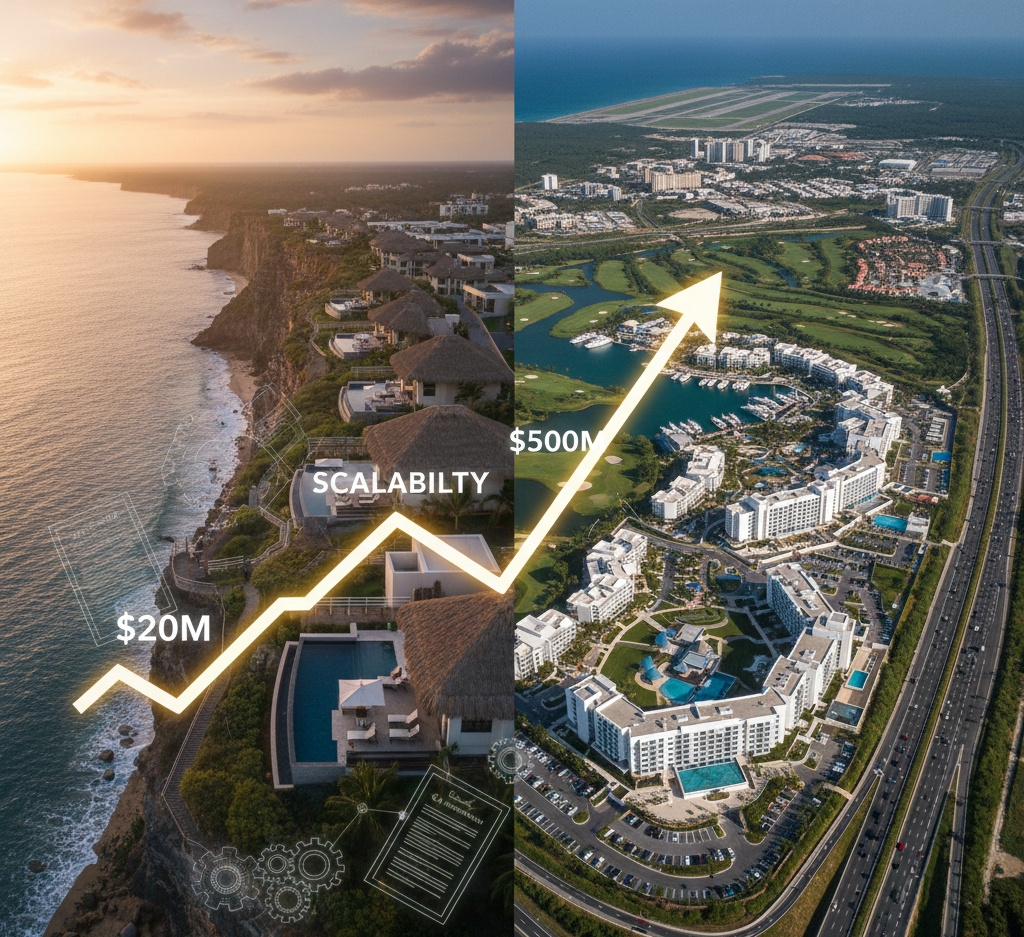
Investment firms trust the Dominican Republic because it offers what few other emerging markets can: Scalability. Whether an asset manager is looking to deploy $20M into a boutique development or $500M into a master-planned community, the DR has the legal framework, the physical infrastructure, and the proven demand to absorb that capital.
As we move into 2026, the Dominican Republic is no longer just a “sun and sand” destination; it is a mature, high-performance asset class that has earned its place in the global institutional portfolio.
